
High-Intensity Interval Training is efficient, adaptable, and results-driven.
This guide upgrades your original copy with clearer structure, stronger benefits, practical buying advice, and ready-to-use routines—both without equipment and with basic gear—so readers leave with immediate steps they can start today.
What HIIT Is and Why It Works
High-Intensity Interval Training alternates short bursts of near-maximal effort with brief recovery periods. That structure taxes your cardiovascular system, recruits multiple muscle groups, and triggers metabolic and hormonal responses that drive fat loss, strength retention, and improved conditioning in minimal time.
- Time efficiency: 10–20 minute sessions can match longer steady-state workouts.
- Metabolic impact: Intense intervals increase calorie burn during and after the session.
- Neuromuscular benefit: Fast, explosive movements improve coordination and power.
- Adaptability: Scalable for beginners and athletes; works anywhere with or without equipment.
Key Equipment Categories and How They Improve HIIT
Resistance Tools
- Resistance Bands: Add progressive tension without heavy weights; perfect for mobility, activation, and loaded bodyweight moves.
- Adjustable Dumbbells: Compact, progressive overload for compound strength work.
- Kettlebells: Best for ballistic movements that combine strength and cardio in a single rep pattern.
Cardio and Power - Jump Rope: Low-cost, high-intensity cardio that also sharpens coordination.
- Stationary Bike or Air Bike: Controlled sprints with measurable resistance for repeatable intervals.
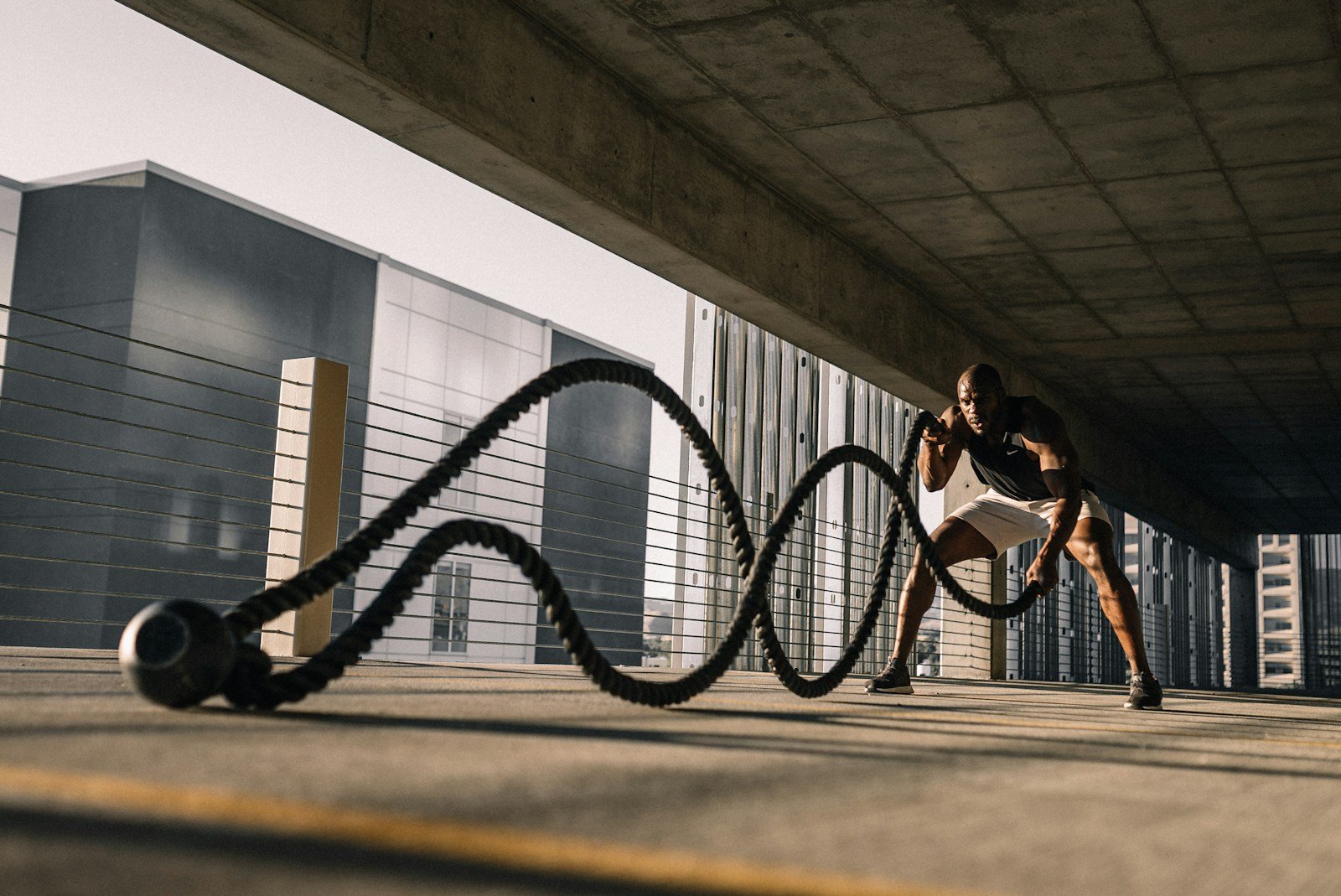
- Battle Ropes: Upper-body power and cardiovascular stress in one tool.
- Plyometric Box: Vertical power, safe progressions for jumps and step-ups.
Recovery and Support - Exercise Mat: Protects joints and provides a stable base.
- Foam Roller: Speeds recovery and maintains tissue quality between sessions.


How to Choose Equipment for Your Space and Goals
- Assess your space: Choose tools that match the footprint you have available. Speed ropes and bands require minimal room; bikes and plyo boxes need more clearance.
- Start minimal: Beginners benefit more from mastering movement and interval structure than collecting gear. Begin with bodyweight, a mat, and a jump rope.
- Progression path: Buy adjustable or multi-weight tools first (adjustable dumbbells, kettlebells with multiple weights, band sets).
- Durability and safety: Prioritise solid construction, non-slip surfaces, and verified weight ratings for jump and plyo equipment.
- Budget vs longevity: Cheaper items can be great to start; invest in at least one long-term piece (adjustable dumbbell or quality kettlebell) as you commit.
HIIT Routines Without Equipment
| Block | Objective | Exercises | Duration | Rounds |
|---|---|---|---|---|
| IGNITE | Activate metabolism and energy | High knees; Jump squats; Mountain climbers | 30s work / 30s rest | 2 rounds |
| BUILD | Functional strength and stability | Push-ups; Squat pulses; Plank shoulder taps | 40s work / 20s rest | 3 rounds |
| SHARPEN | Agility and control | Lateral lunges; Fast feet shuffle; Reverse lunges | 20s work / 20s rest | 4 rounds |
| RECOVER | Mobility and recovery | Self-massage or foam rolling; Yoga flow | 10 minutes total | 1 session |
Usage guidance: pick 1–2 blocks per session. For a 15-minute workout combine IGNITE + BUILD. For active recovery days use RECOVER only.
HIIT Routines With Equipment
| Block | Objective | Equipment | Exercises | Duration | Rounds |
|---|---|---|---|---|---|
| IGNITE | Cardio explosion | Speed rope; Air bike | Jump rope intervals; Air bike sprints | 30s work / 30s rest | 5 rounds |
| BUILD | Strength and power | Kettlebells; Slam balls; Resistance bands | Kettlebell swings; Slam ball slams; Band rows | 40s work / 20s rest | 3 rounds |
| SHARPEN | Coordination and reflexes | Agility ladder; Hurdles; Cones | Ladder drills; Hurdle hops; Cone sprints | 20s work / 20s rest | 4 rounds |
| RECOVER | Flexibility and tissue care | Foam roller; Yoga mat | Foam rolling; Mobility flow | 10 minutes total | 1 session |
Usage guidance: when using equipment, keep intensity high but preserve form; reduce volume the first 2 sessions while you adapt.


Sample Weekly Plan for Different Levels

- Beginner
- Mon: IGNITE (no equipment) 12–15 min
- Wed: BUILD (no equipment) 12–15 min
- Fri: SHARPEN + RECOVER 20 min total
- Intermediate
- Mon: IGNITE + BUILD (mix) 20 min
- Tue: Active recovery RECOVER 10 min
- Thu: SHARPEN + short EMOM sprint 20 min
- Sat: Full mix with equipment 25–30 min
- Advanced
- Mon: Double rounds IGNITE + BUILD 30 min
- Wed: Strength-focused BUILD with heavier kettlebells 25 min
- Fri: Power and agility SHARPEN + plyo complex 30 min
Progress by increasing rounds, shortening rests, or adding load rather than extending session time.
Safety, Warm-Up, and Recovery Essentials
- Warm up 5–8 minutes: dynamic mobility, light jogging, inchworms, leg swings.
- Form over speed: increase velocity only when technique is solid.
- Rest and sleep: HIIT is demanding—schedule low-intensity days and prioritise sleep for recovery.
- Watch fatigue signals: persistent heaviness, poor technique, or mood drops are signs to deload.
- Scale for injury: substitute low-impact moves (cycling sprints, rowing, or low-jump alternatives) where needed.
Final Word and Action Steps
HIIT delivers measurable results when you combine the right structure with thoughtful gear choices and consistent recovery. Use the no-equipment templates to start today. Add one versatile tool when you’re ready to scale intensity.
Action steps for readers:
- Choose 1 block and practice it three times this week.
- Track time, rounds, and perceived exertion.
- Progress by reducing rest or adding a round after two consistent weeks.
[…] HIIT training with weights: which combined high-intensity intervals with strength exercises. This allowed me to efficiently burn fat while building muscle. […]